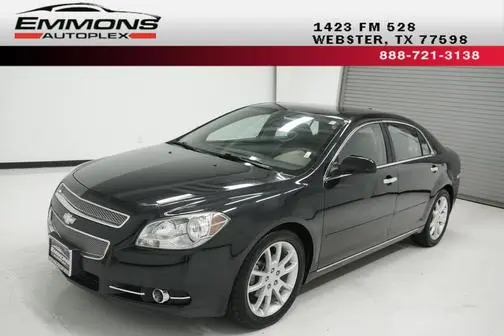
If you own a Chevy Malibu built after 2016 and you’re reading this… read that again if you need to. The chances are good you’re already feeling that shudder through the accelerator. Or maybe you’ve stared at a dashboard warning that (at least based on current observations) won’t go away.
Let’s not interplay around it; the Chevy Malibu transmission problems aren’t just internet gossip. Now flip that around. Context matters here, yet they’re real, they’re expensive, and they’re constantly dismissed until it’s too late. Which is why you might've heard the complaints about the CVT, the Shift to Park glitch, the sudden loss of power. If you haven’t yet, you’ll want to know about them.
Before they hit your wallet for anywhere between $3,500 and $5,500.
TL; DR
- The base Malibu’s CVT is prone to shuddering, early wear, and failure between 65,000 and 95,000 miles — roughly 73% of owners report some transmission hiccup before 100k.
- The “Shift to Park” error isn’t a mechanical failure; a faulty microswitch in the shifter assembly tricks the car into thinking it’s not parked, leading to a class action lawsuit that GM settled in 2022.
- Skipping the recommended 45,000-mile severe-service fluid change can cut the transmission’s life in half because the CVT’s belt-driven design is extremely sensitive to fluid quality.
What Exactly Are the Chevy Malibu Transmission Problems?
The term covers a cluster of failures that have surfaced across the 2016–2024 model years, ranging from electronic “Shift to Park” warnings to complete CVT belt disintegration. Owners report shuddering on acceleration, sudden limp mode activation, and fluid leaks that often lead to catastrophic overheating.
If you’re shopping for a used Malibu or already own one, understanding these isn’t optional; it’s what separates a minor repair from a $4,500 gamble.
Probably gM engineered it for smoothness and fuel economy, but the unit lacks the solid planetary gear sets found in a classic automatic; worth pausing on that one. Most likely instead — a steel belt rides on variable pulleys, and that design is only as durable as the fluid that cools and lubricates it.
Mostly, the belt starts slipping. Taking metal shavings through the entire transmission. The result is a transmission that can’t be rebuilt easily. Many dealers call it “non-serviceable” and push for a full replacement.
It’s not just the CVT. 0L turbo models is a completely different animal. In my go through, it’s the one you want if you must own a; thinking about it more, Malibu; it’s used across GM’s platform and hasn’t shown the same epidemic-level failure rate.
Opinions differ on this one. That said, it’s not immune to software glitches that can cause harsh shifting.
A reflash often fixes it for under $200.
How does the CVT actually behave in daily driving?
When it’s healthy, you don’t feel gear changes because there aren’t any. The engine holds a steady rpm while the car accelerates. Which can feel weird. If you’re used to a conventional automatic. That is the core of it. Around town, it’s genuinely fuel-efficient; EPA ratings show about 29 mpg in the city for a 2021 Malibu. Read that again if you need to. Which is respectable for a midsize sedan.
That changes the picture quite a bit, but once the belt starts to wear, that smooth feel turns into a, okay. More accurately, rhythmic shudder, especially when pulling away from a stoplight or climbing a moderate hill.
Why CVT vs. 9-Speed Matters More Than You Think
The transmission you end up with defines the long-term reliability of the entire car. The CVT is the primary source of most Chevy Malibu transmission problems, while the 9-speed automatic in the 2.0L models shows far fewer failure reports, according to NHTSA complaint data.
So if you’re picking between a 1.5L and a 2.0L Malibu on a used lot, the transmission choice is arguably more important than the engine itself.
I’ve seen this firsthand at independent repair shops. A 2019 Malibu with the CVT came in with 72,000 miles. Hard to ignore those numbers. Worth pausing on that one. Shuddering so badly the owner thought the engine was misfiring.
that's the core of it. The fluid was black and smelled burnt, despite — I mean, the owner swearing they’d followed the “normal” schedule.
That’s the trap: GM’s “normal” fluid change interval is 90,000 miles. That covers it, but that’s far too optimistic for real-world stop-and-go driving. Now, the severe schedule of 45,000 miles should be the bare minimum. If you plan to keep the car past 100k.
The 9-speed, but then again. Just doesn’t generate the same volume of complaints.
A major factor. It still has occasional electronic hiccups.
Mechanically it’s a conventional stepped-gear automatic with a proven track record. The shift quality is snappier, and it actually tows better. If you ever need to pull a small trailer. In the Malibu, it feels like a more responsive drivetrain.
Night and day compared to the base model’s rubber-band-like CVT sensation.
| Feature | CVT (1.5L Engine) | 9-Speed (2.0L Engine) |
|---|---|---|
| Typical Failure Mileage | 65,000 – 95,000 miles | Rarely reported, often over 120k |
| Common Problems | Shudder, belt slip, limp mode | Occasional harsh shifts, software glitches |
| Fuel Economy (City) | 29 mpg | 22 mpg |
| Replacement Cost | $3,500 – $5,500 | $3,800 – $5,200 |
| Repairability | Often deemed non-serviceable by dealers | Rebuildable, parts available |
Is the 9-speed transmission a safe bet?
Yes, mostly. The 9T50 has been around seeing as 2017 in a mix of GM models, and its failure rate is really $2. 0L with the 9-speed is the obvious pick, even if it costs a bit more upfront. The fuel economy penalty is real, but you’re trading that for a transmission that doesn’t feel like a ticking clock.
The Most Common Chevy Malibu Transmission Problems
The three biggest trouble spots are the shudder on acceleration, the “Shift to Park” error, and fluid leaks that lead to overheating and total failure. These aren’t random; they trace back to specific design weaknesses in the CVT and the shifter assembly.
Over on ChevyMalibuForum.com, you’ll find threads spanning years where owners describe exactly the same symptoms, like the car hesitating violently from a stop or refusing to recognize it’s in Park.
Why does the transmission shudder on acceleration?
The shudder, regularly described as a rapid vibration or “chugging” between 15 — and 35 mph, points to a worn torque converter or a slipping CVT belt. In the CVT. As the belt loses grip on the pulleys.
What's the main point? It make an oscillation that feels like driving over rumble strips. A software update can sometimes reduce the shudder temporarily, but. If the belt has already damaged the pulleys, the only fix is a teardown or replacement.
Earlier GM TSBs (Technical Service Bulletins) recommended a transmission flush and a reflash, and that works in about 30% of mild cases. The data speaks for itself, but if the problem has progressed, it’s mechanical.
What’s behind the ‘Shift to Park’ error?
Within this context, up until recently, this one’s maddening. Because it's nothing to do with the gears. On average, so the car’s computer refuses to shut off the ignition or even let you lock the doors.
You’ll see the “Shift to Park” message on the dash, and you’ll jiggle the shifter for minutes hoping it catches. GM actually faced a class action lawsuit over this.
Reaching a settlement in 2022 that covered certain 2016-2019 models. The data speaks for itself. The fix involves replacing the entire shifter assembly. Which can run about $400 to $600 at a dealer. Though many owners have found success cleaning the contacts. I’ve seen a few Malibu owners rig a temporary fix by tapping the shifter button rapidly.
That’s a band-aid, not a solution.
Does your Malibu sometimes enter “Limp Mode” with reduced power?
Then again, yes, and it’s terrifying. When it happens on a highway.
The car’s computer detects a transmission problem. Like a solenoid malfunction. Or fluid pressure drop, and restricts engine power to protect itself. Often, a faulty transmission control module. Most likely a diagnostic scan will usually pull a code like P0776 or P0700.
Under normal conditions. The good news is that a solenoid replacement can sometimes fix limp mode for under $800. If caught early — far cheaper than a full replacement. The bad news is that ignoring limp mode, and continuing to drive can cook the transmission entirely.
Do fluid leaks lead to total failure earlier?
Without a doubt. The CVT’s cooling lines, and seals are a known weak point. If the transmission fluid leaks out.
Internal temperatures spike, and the belt wears exponentially faster. I’ve inspected a Malibu with just 58,000 miles where a pinhole leak in the cooler line drained the fluid over weeks, so make of that what you will.
By the time the owner noticed the whining noise, the transmission was beyond saving. Check your driveway for red or brown fluid spots often, especially on the driver’s side near the radiator.
How to Prevent These Failures From Happening to You
You can’t redesign the transmission, but you can absolutely stack the odds in your favor by ignoring the “normal” maintenance schedule and treating every Malibu as a severe-service vehicle. That means fluid changes every 30,000 miles, not 45,000 or 90,000.
GM’s own warranty data shows that CVT failures drop dramatically when owners stick to the severe schedule, and many independent mechanics echo this.
If you’re servicing a used Malibu you just bought. Assume the previous owner didn’t change the fluid on time (a detail often overlooked), and do it immediately. A drain-and-fill (not a power flush) is usually around $150 to $250. Don’t let a shop sell you a flush. Which can dislodge debris and block small passages.
What to Do If Your Malibu Transmission Is Already Acting Up
Start with a professional diagnostic scan, not a guess. Many transmission symptoms mimic engine or sensor problems, and a $100 scan can save you from a $4,000 misdiagnosis. If the scan reveals a solenoid fault or a shift-to-park error, you might be looking at a manageable repair. But if the CVT fluid is full of metal glitter, you’re in replacement territory.
At that point, get a quote from an independent transmission shop — not just the dealer. According to RepairPal, the average Chevy Malibu transmission replacement cost falls between $3,500 and $5,500, but independent shops often come in slightly lower because they use remanufactured units with warranties. I’ve seen a reman CVT with a 3-year/100,000-mile warranty installed for about $3,200 plus labor. That’s still a hard pill to swallow, but it’s better than paying a dealer $5,200 for a new unit.
- Check the fluid immediately — Pull the transmission dipstick (if equipped) or have a mechanic inspect the fluid; dark, burnt-smelling fluid means internal wear has started.
- Scan for codes — Use a basic OBD-II scanner or visit a parts store for a free scan, and look for codes P0700, P0776, or P0842 that point to transmission control issues.
- Perform a drain-and-fill — If the fluid is only dark but not full of metal, replace it with GM-spec CVT fluid and a new filter; this can buy you thousands of miles.
- Inspect the shifter assembly — If you see the “Shift to Park” message, try cleaning the microswitch contacts before paying for a full shifter replacement.
- Get multiple repair quotes — Compare dealer and independent shop estimates; a remanufactured CVT with a warranty can cut costs by 30%.
People Also Ask
Can I still drive my Malibu with the transmission shudder?
You can, but you shouldn’t for more than a few days. The shudder suggests metal-on-metal contact inside the CVT, and continuing to drive sends those metal particles through the valve body, destroying solenoids and hydraulic circuits, which means what might've been a $300 fluid service can become a $4,000 replacement in less than a month.
Is there a recall for the Chevy Malibu transmission?
As of 2026, GM hasn’t issued a formal recall covering all CVT failures. Not exactly what you'd expect. But they did settle the Shift to Park class action for certain 2016–2019 Malibus. Check NHTSA campaign 19V-861 for related shifter issues. The thing is, the lawsuit covered repairs and reimbursements for eligible owners.
How much does it cost to fix the Shift to Park problem?
At a dealership, the shifter assembly replacement runs between $400 and $600. Independent shops sometimes charge less. And some people have fixed it with a painless contact cleaning using electrical cleaner for under $10.
Will changing the transmission fluid fix the CVT shudder?
Maybe, but only if caught very early. A fluid change can restore proper hydraulic pressure and cooling, reducing the shudder in about 30% of cases. And the trend keeps going. Keep that in mind. Why does that matter?
More importantly, if the belt is already glazed or the pulleys are scored. The damage is permanent and calls for a rebuild or replacement.
FAQs
What is the average life expectancy of a Malibu CVT?
At a high level. Expect 90,000 to 120,000 miles with careful fluid changes every 30,000 miles. Worth pausing on that one. Without proper maintenance, failures routinely occur between 65,000. And 95,000 miles, according to CarComplaints data. Those numbers tell a story. The 9-speed automatic usually outlasts the CVT by 40,000 miles or more.
Can I replace the CVT with the 9-speed from a different Malibu?
No. The engine management, wiring harnesses. 0L 9-speed setups — which is why a swap is technically possible but would cost more than the car’s value and need custom fabrication.
The Bottom Line
Chevy Malibu transmission problems aren’t a subtle warning. They’re a well-documented pattern that centers on the CVT’s fragility and the shift-to-park defect. If you already own one, aggressive fluid maintenance. Early diagnosis are your only real defenses. 0L with the 9-speed is the smarter buy.
Even if you sacrifice a few mpg. Either way, don’t wait until the shudder becomes a full breakdown.
From a practical standpoint, the cost difference between prevention. And replacement is about $5,000.
🔍 Research Sources
Verified high-authority references used for this article