The most common reason for a v guard stabilizer green light not working is a tripped internal fuse or a power supply interruption at the wall outlet. When the indicator light fails, the device is likely not receiving the required input voltage to activate its output circuit. If the unit remains silent and the light stays off after you check the wall plug, the internal safety mechanism has likely disconnected the power to protect your connected appliances. Always verify your input power first before assuming the stabilizer itself is broken.
Why the stabilizer green light fails
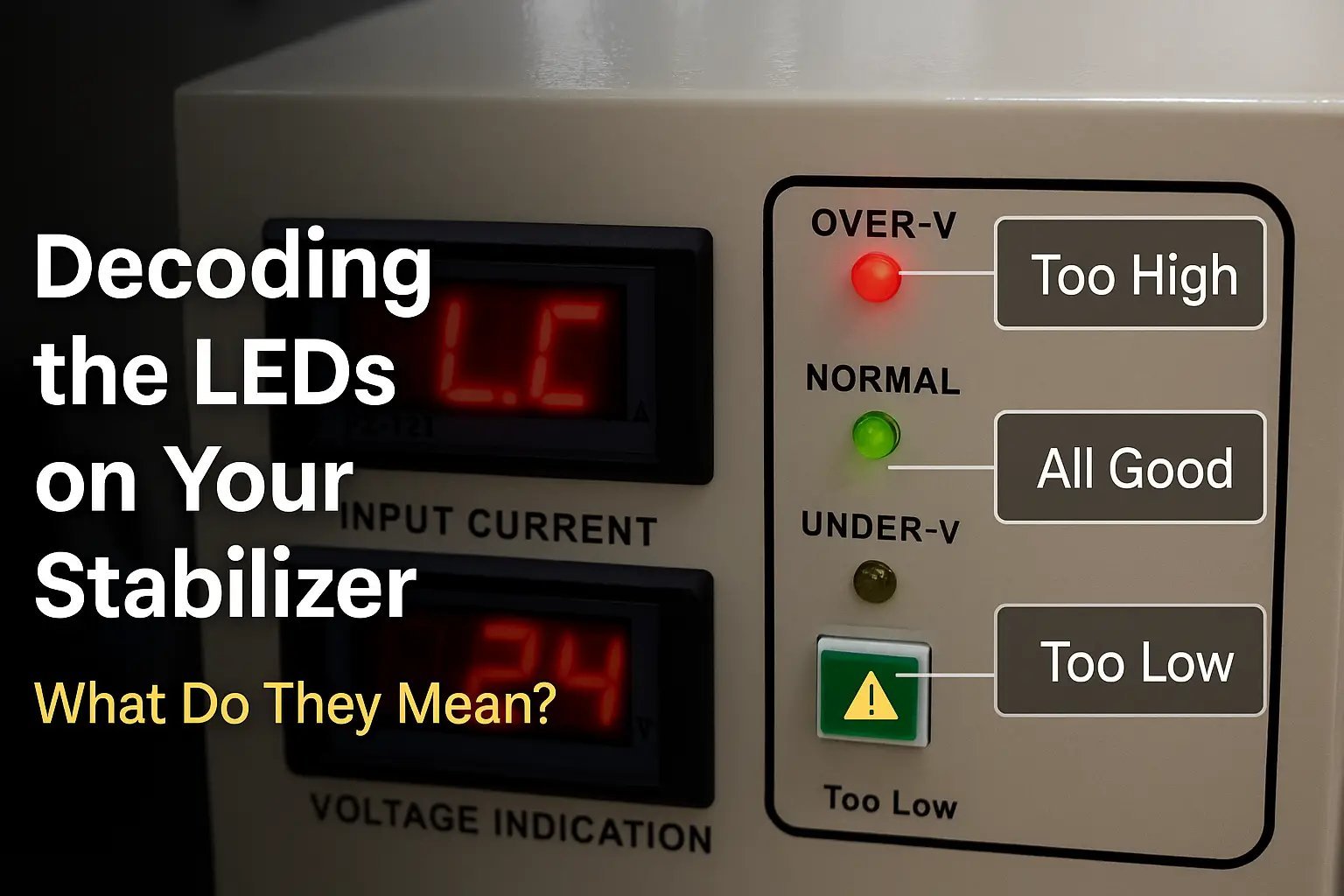
The primary cause for a dead indicator light is a lack of incoming power. Stabilizers are designed to shut down if the input voltage is far outside the safe operating range, or if an internal spike has triggered a protection circuit. If your home experiences a sudden brownout or a surge, the stabilizer acts as a gatekeeper. It will cut the connection to your equipment to prevent damage, often turning off all status lights in the process.
Another frequent cause involves the wall socket or the power cord. If the plug is loose or the switch on your wall plate is faulty, the stabilizer can’t pull the electricity it needs to function. Even if the device seems plugged in, a corroded contact point or a loose wire inside the plug can create a high-resistance connection that prevents the light from glowing.
Finally, internal components can fail over time. Stabilizers contain delicate electronic boards that regulate voltage. If the transformer or the logic board inside the unit develops a fault, the light won’t turn on even if the power cord is receiving electricity. While you can check the external power sources yourself, internal board failures require specialized tools. You should never attempt to open the casing, as this carries a high risk of electric shock and voids your warranty. If you suspect an internal failure, consult the V-Guard customer support portal to find an authorized service center near you.
Check the wall power source
This fix is for users who suspect the issue is outside the stabilizer. Before you assume the unit is dead, you must confirm that your wall outlet is delivering the correct voltage. Take a small, working appliance like a lamp or a phone charger and plug it directly into the same socket you’re using for your stabilizer. If the lamp doesn’t turn on, verify the lamp works in another known-good outlet before concluding the problem is your home’s electrical circuit. In this case, check your home’s main fuse box or circuit breaker to see if a switch has flipped.
If the lamp works, move to the stabilizer’s power cord. Inspect the cord for any signs of fraying, melting, or sharp bends. If the cord is damaged, don’t use it; the unit requires a professional cable replacement to operate safely. If the cord looks healthy, ensure the plug is pushed firmly into the socket. Sometimes, a loose fit prevents the metal prongs from making full contact. If you have a multi-socket extension cord, remove it and plug the stabilizer directly into the wall. Extension cords often struggle to carry the high current required for a stabilizer, leading to voltage drops. If the light remains off after connecting directly to a verified wall outlet, the issue is internal. Don’t try to bypass the safety features or force the unit to turn on, as this could cause permanent damage to your connected television or refrigerator.
Test with a different appliance
This fix is for users who need to confirm if the stabilizer is truly at fault. If you have another compatible device, try plugging that into the stabilizer output socket. Sometimes the light indicator itself can burn out while the stabilizer is still working perfectly. By testing the output, you can determine if the stabilizer is actually passing power to your equipment.
If your appliance receives power but the green light is off, the bulb or the LED circuit inside the stabilizer has failed. This is a minor issue that doesn’t affect the performance of the unit, but it makes it hard to know if the device is currently active. If your appliance doesn’t receive power, the stabilizer has failed to engage its output relay.
This is a clear sign that the device needs professional inspection. If you’re comfortable, you can check the user manual to see if your specific model has a reset button or an external fuse holder. Some models have a small glass fuse or a push-button circuit breaker on the back or side. If you see a button labeled “Reset,” press it once. If the button clicks or stays in, wait for the delay timer to finish. If the light still doesn’t turn on, you must contact an electrician or the manufacturer. Don’t attempt to bypass an internal fuse, as this removes the safety barrier between your house power and your expensive electronics.
Contact professional repair services
This fix is for cases where the stabilizer remains unresponsive after you have verified the input power. If the unit is silent, the light is off, and no power reaches your appliances, the internal control board or the main transformer is likely damaged. This is a common issue after a severe lightning storm or a sustained period of low voltage that forced the unit to work too hard.
It’s worth the effort to contact a professional if the stabilizer is still under warranty or if the unit is a high-capacity model designed for expensive appliances like air conditioners. Stabilizers for large appliances represent a significant investment, and a repair by an authorized technician is usually much cheaper than buying a new unit. However, if the stabilizer is an older, low-capacity model, compare the repair cost against the price of a new unit. If the repair cost exceeds half the price of a new stabilizer, it’s generally better to replace it.
Never try to solder internal connections or replace capacitors yourself. These components hold a dangerous electrical charge even when the unit is unplugged from the wall. Only a trained technician has the proper equipment to discharge the internal capacitors safely. If you live in an area with frequent power fluctuations, ask the technician about installing a surge protector alongside your stabilizer to prevent this from happening again.
What not to do
- Don’t open the outer casing: The internal components hold high-voltage charges that can cause severe injury or death even after the unit is unplugged.
- Don’t bypass the fuse: Replacing a blown fuse with a wire or a higher-rated fuse creates a massive fire hazard and will destroy your connected equipment during the next power surge.
- Don’t use a universal adapter: Using a loose-fitting adapter can cause arcing and heat buildup at the connection point, which often melts the plug and damages the stabilizer input.
- Don’t shake or hit the unit: Striking the stabilizer to “fix” a loose connection inside can damage delicate internal sensors and won’t solve the underlying electrical fault.
How to stop it happening again
To prevent future failures, ensure the stabilizer is used only for the specific appliance it was rated for. If you change your appliances, verify the wattage requirements.
| If you’re doing this | Do this instead | Why |
|---|---|---|
| Leaving it in a damp area | Place it in a dry, ventilated spot | Moisture causes internal corrosion |
| Using it for multiple heavy loads | Use one unit per appliance | Overloading triggers protection shutdowns |
| Ignoring the output rating | Match capacity to the device | Mismatched power leads to board failure |
| Leaving it on during storms | Unplug it during severe weather | Direct lightning strikes bypass protection |
Frequently asked questions
Can I leave the stabilizer on 24/7?
You can leave the stabilizer on as long as the input voltage remains within the manufacturer’s specified range. These devices are designed for continuous operation. However, turn it off if you notice loud humming or if the room temperature exceeds forty degrees Celsius.
Why does my stabilizer click constantly?
The clicking sound indicates the internal relay is switching to adjust for voltage fluctuations. This constant motion is a normal response to unstable power, but it causes mechanical wear. Check your model’s label to see if the voltage is hovering at the switching threshold.
Is it safe to use if the light is off?
It isn’t safe to use the stabilizer if the green light is off and you can’t verify output power. A lightless unit may have suffered an internal failure and could be failing to protect your appliance. Always confirm the unit is passing correct voltage before connecting electronics.
How long should the delay timer last?
The delay timer lasts between three to five minutes to allow compressor-based appliances like refrigerators to stabilize. This prevents damage from rapid power cycling. If the stabilizer doesn’t engage after ten minutes, the input voltage may still be outside the unit’s operating range or there’s an internal fault.
What happens if I ignore the green light?
Using a broken stabilizer risks running appliances on unregulated power, exposing them to damaging voltage spikes. The light is your primary indicator that the unit is functioning correctly. If the light remains off, assume the unit provides no protection and disconnect your equipment immediately.
Final Thoughts
If these simple checks don’t bring the power back, it’s best to contact a certified technician rather than opening the casing yourself. You shouldn’t risk a shock by tinkering with internal wiring. Reach out to the manufacturer’s support team today to see if your unit’s warranty can cover a professional repair.
Related guides