
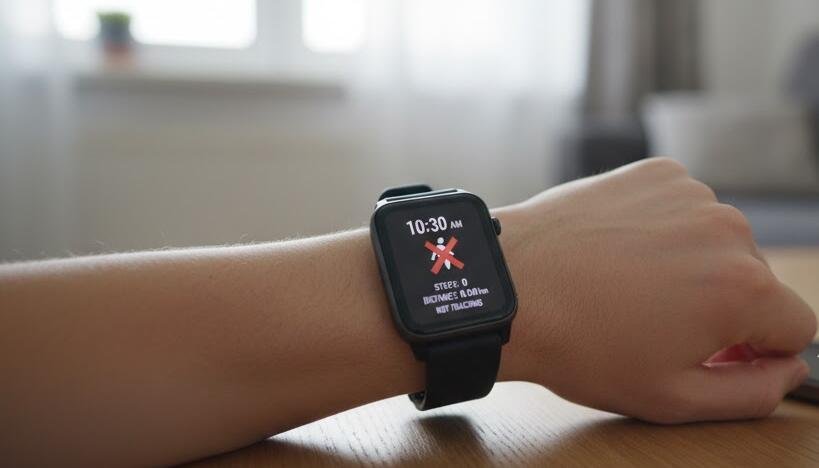
A loose strap or a disabled motion sensor is the reason your samsung smartwatch not counting steps happens in most cases. You can confirm this by checking if the watch registers movement while you swing your arm while walking. If the device remains at zero, the issue is likely a software setting or a hardware fault. You should verify your permissions in the Samsung Health app to ensure the sensor is active. Always check the official Samsung support page for health sensors to see if your specific model requires a manual calibration for motion tracking.
Why your Samsung smartwatch not counting steps
| Cause | How common | How to confirm it | Fix it yourself? |
|---|---|---|---|
| Loose watch strap | Very common | Watch slides on wrist | Yes |
| Disabled sensors | Common | Health app shows zero | Yes |
| Software glitch | Common | Restart the device | Yes |
| Low battery mode | Occasional | Power saving is active | Yes |
| Corrupted cache | Occasional | App crashes or freezes | Yes |
| Sensor hardware fail | Rare | No movement detected | No |
A loose strap is the leading cause of missing data. If you can fit more than one finger between the band and your skin, the sensor can’t maintain consistent contact. Tighten it by one notch to see if your heart rate readings stabilize within ten minutes.
Many users accidentally disable biometric tracking in their privacy settings. Check your phone’s permission menu to ensure your watch has “Always Allow” access to motion sensors.
If you suspect a hardware failure, test the green LED lights on the back of the watch. This requires a professional repair, as DIY fixes for internal components often void your remaining warranty.
Incorrect fitment on the wrist
A loose watch strap prevents the sensors from maintaining consistent contact with your skin, which is necessary for accurate movement tracking. The optical sensor needs to stay flush against your wrist to detect the rhythmic motion of your arm.
To test this, fasten the band one notch tighter than you usually wear it. Walk for fifty steps while keeping your arm at a natural, swinging angle. If the count increases, the fit was the culprit. You must ensure the watch sits about one finger-width above your wrist bone. This placement allows the sensors to pick up the subtle vibrations of your stride without being blocked by the bone or gaps in the band.
If the strap is too loose, you lose data during every walk. If it’s too tight, you might experience skin irritation or restricted blood flow. A good rule is that the watch shouldn’t rotate around your wrist when you move your arm, but you should still be able to slide a finger under the strap. If you use a metal link bracelet, you may need to remove a link to get the right fit. This adjustment takes only a few minutes and costs nothing, but it’s the most common mistake people make when setting up a new device.
Disabled permissions in health settings
The Samsung Health app must have explicit permission to access your device’s sensors and motion data. If you recently updated your phone or the watch software, these permissions can sometimes reset to a default “off” state. Without these permissions, the watch tracks heart rate but ignores step counts entirely.
Check this by opening the Samsung Health app on your connected phone. Navigate to the settings menu and look for “Permissions” or “Data tracking.” Ensure that “Physical Activity” or “Motion Sensors” is toggled to the “On” position. If you see that permissions are already granted, toggle them off and then back on again to force the system to re-recognize the sensor inputs.
This fix takes about three minutes. If you have multiple devices linked to one account, ensure you have selected the watch as the primary tracker for your steps. A common mistake is leaving the phone as the primary tracker, which causes the watch to stop logging steps because it thinks the phone is doing all the work. If your settings are correct but the count remains zero, you should restart both the phone and the watch to clear any temporary background conflicts. This varies by model — check the label on your app settings to see if your specific version requires a manual sync after changing these permissions.
Software errors and cache buildup
Background software conflicts often stop the motion sensor from communicating with the step-counting algorithm. When the system cache becomes cluttered with old data, the watch may stop updating your daily activity totals. This happens most often after a major firmware update that didn’t finish installing correctly.
To address this, perform a forced restart on your watch by holding the power button for ten seconds until the Samsung logo appears. If the step count still doesn’t update, you should clear the cache partition of the device through the recovery menu. This process doesn’t delete your personal data like messages or photos, but it removes temporary files that are causing the sensor to hang.
This process takes about five minutes of your time. If you choose to reset the watch to factory settings, you must back up your data first, as this will erase everything. This is a last resort if the restart fails. Who this is NOT for: if your watch screen is cracked or the sensors are physically damaged, software resets won’t fix the hardware failure. In that case, you need to visit a professional repair center. If you’re still seeing zero steps after a full reset, the internal accelerometer is likely broken and requires a professional technician to replace the component.
The less likely causes
Power saving mode: This mode throttles the accelerometer to preserve battery life, which often prevents steps from registering during low-intensity movement. Open your quick panel and ensure this setting is toggled off before walking.
Outdated firmware: Software bugs frequently disrupt the sensor’s polling rate. Check the Galaxy Wearable app for pending updates. If the app shows a version ending in “01” or lower, you’re likely missing the patch that fixed the step-counting logic.
Third-party apps: Applications like Strava or MyFitnessPal may override the native pedometer to prioritize their own GPS data. If your step count remains frozen, uninstall these apps one by one. If the count returns after removing a specific app, that integration is the culprit.
Hardware damage: A hard drop or water ingress can physically decouple the sensor. If the watch fails to detect your heart rate as well, the internal hardware is likely compromised. Professional inspection is required.
What a fix usually involves
Fixing a step-counting issue rarely requires expensive parts. If the problem is a loose strap, you simply adjust the buckle or, in some cases, buy a new band if the current one has lost its elasticity. These are inexpensive accessories that you can find easily. If the issue is software-based, the fix involves your time and attention to menu settings, which costs nothing.
When a hardware sensor fails, the repair involves replacing the internal board or the sensor array. This is a specialized task that requires a professional technician, and the price depends on your warranty status. If you’re under warranty, the manufacturer might cover the repair. If you’re not, the cost could be a significant portion of the price of a new one. Before paying for repairs, always check your warranty status on the manufacturer’s official website using your device’s serial number. This prevents you from paying for work that should be free under your coverage plan.
Frequently asked questions
Can a dirty sensor stop my watch from counting steps?
Yes, a dirty sensor can block the light signals needed for tracking. If the back of your watch has a buildup of sweat, lotion, or dead skin, it can interfere with the sensor’s ability to monitor your movement. Use a soft, lint-free cloth to gently wipe the back of the watch. Avoid using harsh chemicals or abrasive materials that could scratch the glass over the sensors.
How long does it take for steps to sync to my phone?
About one minute is the typical time for a sync to complete. If you’re walking and don’t see the number change on your phone, wait a moment while the watch transmits the data via Bluetooth. If it takes longer than five minutes, ensure your Bluetooth is active and the two devices are within a few feet of each other.
Is it safe to reset my watch to fix tracking?
Yes, it’s safe to reset your watch if you have backed up your data. A factory reset wipes the device clean and returns it to its original settings, which often clears out deep-seated software bugs. Just make sure you use the Samsung Cloud backup feature in the Galaxy Wearable app before you begin so you don’t lose your saved health data and watch faces.
What happens if I move too fast for the sensor?
If you’re moving extremely fast, the accelerometer might misinterpret the motion. Most devices will still count the movement, but the accuracy may drop slightly.
Does it matter if I wear the watch on my dominant hand?
No, it doesn’t matter for the step count, but it may affect sensitivity. Most people wear the watch on their non-dominant hand to avoid extra movement from daily tasks. If you wear it on your dominant hand, the watch might count false steps. You can adjust the “wearing hand” setting in your app to filter these movements.
Why does my watch stop counting when I am in the cold?
Very cold temperatures cause the lithium-ion battery to lose voltage, forcing the watch to enter a low-power state. If you’re exercising in the cold, keep the watch covered by your sleeve to maintain a warmer temperature. This helps the battery and the sensors function as intended during your workout.
Final Thoughts
If these fixes don’t get your data moving again, it’s time to reach out to a professional. You shouldn’t hesitate to contact Samsung’s customer service team through their website for a deeper diagnostic. They’ll help you determine if a repair is needed so you can get back to your fitness goals soon.