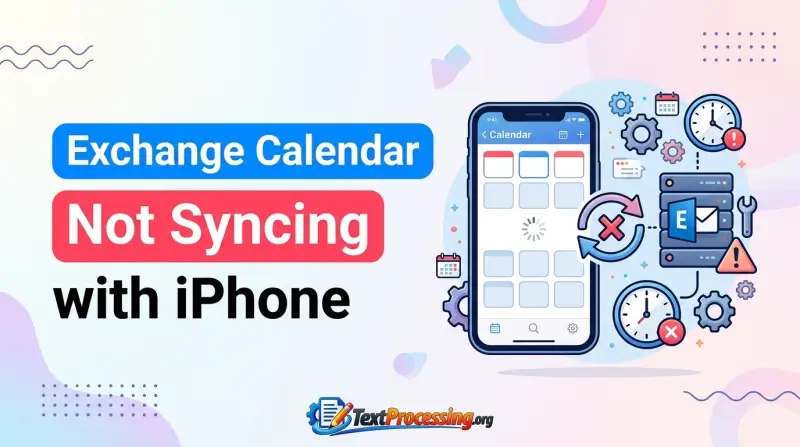
Your account data will keep not syncing when there’s a mismatch between your local cache and the cloud server. This is often caused by a stalled background process or an outdated authentication token that prevents your device from talking to the main database. To fix it, you should sign out of your account, restart your application or device, and sign back in to force a fresh connection. This clears the corrupted handshake and usually restores data flow immediately.
Why this happens

Data synchronization relies on a constant, secure handshake between your local device and a remote server. When this process breaks, the system can’t verify your identity or the current state of your files. The most common cause is a conflict in the local cache, where the app thinks it has the most recent version of a file, but the server holds a different one. This “state mismatch” stops the sync to prevent you from accidentally overwriting newer data with old information.
Another frequent cause is an expired authentication token. Every time you log in, the app receives a digital key that proves who you are. If this key expires while the app is running in the background, the sync will silently fail. You won’t see an error message, but no new data will move. Finally, a poor network connection or a firewall setting can block the specific port the app needs to send data. If your internet speed drops during a large upload, the app might time out and remain in a “pending” state until you manually trigger a refresh. This behavior is standard for most cloud-based services; check your Google account sync troubleshooting guide to see how these handshake protocols manage conflicts across different hardware.
Fixing a keep not syncing issue
This fix is for users whose app shows a “sync error” icon or a spinning wheel that never stops. It forces the software to drop the current, broken session and request a new one from the server.
To start, navigate to your account settings within the application. Locate the “Account” or “Profile” menu and select “Sign Out.” Once you’re logged out, don’t simply close the app. You must fully quit the application or restart your device. This is a critical step because it clears the temporary memory holding the bad connection data. If you skip the restart, the app might try to use the old, broken token again.
After the device restarts, open the app and sign in with your credentials. The system will now perform a “handshake” from scratch. If your data is large, this might take several minutes. You’ll know it worked when the sync icon changes from a warning symbol to a checkmark or a “Synced” status.
This isn’t for users who have lost their password, as you need your credentials to sign back in. Also, keep in mind that this fix only works if your internet connection is stable. If you’re on a public Wi-Fi network that blocks certain ports, you’ll need to switch to a home network or cellular data to see the sync complete.
Clear the application cache
This approach is for cases where the sync is enabled but the files remain stuck in a “processing” or “queued” state. It removes the temporary files that the app keeps on your phone or computer to speed up loading times, which can sometimes become corrupted.
On a smartphone, go to your device’s “Settings,” then “Apps,” and find the specific application. Look for “Storage” and select “Clear Cache.” Don’t select “Clear Data” unless you’re sure your files are backed up, as that will delete your local settings and potentially unsynced drafts. On a desktop computer, this usually involves deleting the specific cache folder listed in the software’s “Advanced” or “Preferences” menu.
If you have multiple devices, always clear the cache on the device that’s showing the sync error first. If the problem persists, clear it on all connected devices to ensure no old data remnants are blocking the server. You’ll know this worked when the application begins re-indexing your files. It will look like it’s downloading everything again, but it’s actually comparing your local state to the cloud state to resolve the conflict. If you’re using a work computer, check with your IT department first, as they may have set up folder restrictions that prevent the app from clearing its own cache files.
Reinstall the software
This is the final step for persistent sync failures. It’s worth the effort only if you have already tried signing out and clearing the cache without success. Reinstalling removes the entire application framework, which is necessary if a recent update failed to install correctly or if a core system file is missing.
Before you delete the app, ensure all your important files are accessible on the web version of the service. Once you’re sure your data is safe in the cloud, uninstall the application from your device. Restart your computer or phone to remove any residual temporary files, then download the latest version directly from the manufacturer’s official website.
This process requires a stable internet connection and may take time depending on the size of your library. If you’re using a mobile device, check your data plan usage, as downloading a large app and re-syncing your files can consume a significant amount of data. This fix isn’t for users with limited storage space, as the re-sync process may temporarily use extra room on your drive while it rebuilds the local database. If the sync still fails after a fresh install, contact the service’s official support team, as the problem might be an issue with your specific user account on their server rather than your local equipment.
What not to do
You’ll then be forced to restart the entire process from scratch, costing you hours of bandwidth.
Don’t move or rename files while they’re in the middle of a sync. The software tracks the specific file path; changing it mid-transfer marks the file as missing. If you must reorganize, wait for the status icon to turn green.
Don’t use third-party “sync repair” tools found online. These utilities often contain malware designed to harvest credentials. If your sync hangs for more than ten minutes, the correct decision rule is to clear the local cache and re-authenticate rather than running unauthorized scripts.
How to stop it happening again
The best way to prevent sync issues is to keep your software updated and avoid letting your storage drive reach its full capacity.
| If you’re doing this | Do this instead | Why |
|---|---|---|
| Using a full hard drive | Keep 10% of space free | The app needs room to stage files |
| Ignoring update notifications | Install updates immediately | Updates fix known sync bugs |
| Using multiple accounts | Use one primary account | Prevents authentication conflicts |
Most users mistake a slow sync for a network problem. If your upload speed is normal but the app hangs, check your local cache folder size.
Use this decision rule: if the status icon shows a yellow triangle, force a manual re-index. If the icon remains red, you must sign out and clear your local credential cache. Failing to clear these files forces the app to keep trying a corrupted handshake, which consumes significant CPU power and eventually drains your laptop battery.
Frequently asked questions
Can a slow internet connection stop sync?
Yes, a slow or unstable internet connection is a primary cause of sync failures. If your connection drops, the app may time out before completing the server handshake, leaving files in a “pending” state. Try moving closer to your router or using a wired ethernet connection to stabilize your upload speed.
How long should a sync take?
Sync time depends on your file size and upload speed, ranging from seconds for documents to hours for large photo libraries. If the process remains stuck for over four hours, a specific file may be corrupted or blocked. Check your sync dashboard to identify and remove any problematic files.
Is it safe to delete the cache?
Yes, it’s safe to clear the application cache on almost all modern platforms. The cache only holds temporary thumbnails, metadata, and temporary copies of your files to help them load faster. When you clear it, the app will simply download these items again from the server the next time you open it. Your actual, master files remain safely stored on the cloud server and aren’t affected by this action.
What happens if I reinstall the app?
Reinstalling the app effectively resets the software to its factory state. It removes the local settings, the database index, and any broken temporary files that were causing the sync conflict. It doesn’t delete your files from the cloud service. Once you sign back in, the app will perform a fresh scan of your library and rebuild its index, which should resolve any lingering issues with the connection or data display.
Why does my phone say sync is off?
This usually happens because of system-level power saving modes or restricted background data settings. Many phones automatically disable background syncing to preserve battery life when your charge is low. Check your “Battery” or “Data Usage” settings to ensure the application is permitted to run in the background.
Final Thoughts
If the problem persists after these attempts, don’t hesitate to reach out to our support team for a deeper look. They’ll help you check your network settings or investigate potential server-side conflicts. We’re here to ensure your information stays updated and accessible whenever you need it, so just send us a message.
Related guides