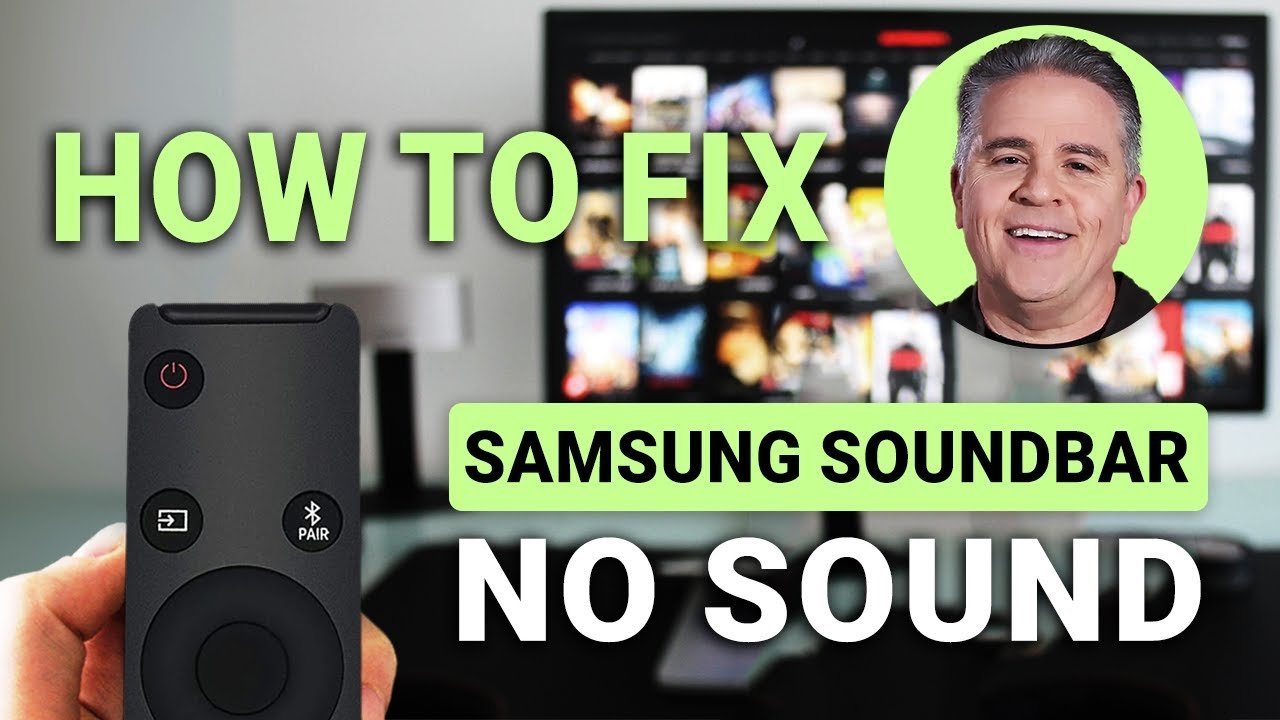
You can often solve persistent samsung soundbar volume problems by performing a full power cycle and checking the HDMI-CEC communication settings on your television. If the audio level is stuck or erratic, it’s usually a handshake issue between your TV and the soundbar rather than a hardware failure. Most users find that disconnecting the power cables for at least sixty seconds resets the internal processors and restores normal volume control functionality.
Causes of your soundbar volume problems
Most audio issues occur because the HDMI-CEC protocol—often called Anynet+ on Samsung devices—fails to establish a proper communication link. When this digital “handshake” is interrupted, the television sends incorrect volume commands to the soundbar, or it stops sending them entirely. This is common after a firmware update or a sudden power flicker that leaves the devices in a confused state.
Another frequent cause is the “Auto Volume” or “DRC” (Dynamic Range Compression) setting. These features automatically level out loud explosions and quiet dialogue, which can make the soundbar feel like it’s ignoring your volume inputs. If these settings are active, the soundbar prioritizes its internal algorithm over your remote control signals.
Finally, a physical connection issue can trigger volume instability. If you use an HDMI ARC or eARC port, the cable must be high-speed and fully seated in the port. A loose or damaged cable can cause intermittent signal drops, leading the system to default to a low-volume state or cause the volume to fluctuate wildly as the connection reconnects. You can review the Samsung support documentation for soundbar connectivity to identify the correct port configuration for your specific model. Always ensure your firmware is current, as manufacturer updates often patch communication bugs between specific TV and soundbar pairings.
Reset the connection hardware
If your soundbar is unresponsive, a full power cycle is the most effective first step. Start by turning off both the TV and the soundbar using their respective remotes. Unplug both devices from the wall outlet. While they’re unplugged, disconnect the HDMI cable from both ends.
Inspect the cable pins for any debris or bending. Reconnect the HDMI cable firmly into the HDMI ARC or eARC port on both the TV and the soundbar. Plug the soundbar back into the wall first, wait for the status lights to stabilize, then plug in the TV. Power on the TV and check if the volume control on your television remote now manipulates the soundbar volume.
This process is for users who have a direct HDMI connection. If you’re using an optical cable, this step won’t restore remote control functionality because optical cables don’t carry volume commands. You’ll need to use the soundbar’s dedicated remote to control the volume if you rely on an optical connection. If the volume still fails to respond after this reset, you’re likely dealing with a software conflict that requires a deep factory reset of the soundbar unit itself.
Adjust the communication settings
If the physical reset didn’t work, you must look at the digital settings within your TV menu. Navigate to the “Sound” or “Audio” settings on your television and locate the “Expert Settings” or “HDMI-CEC” menu. Even if Anynet+ appears to be enabled, toggle it off and back on again to force the TV to re-scan for the soundbar device.
Check for a setting labeled “HDMI Input Audio Format” or “Digital Output Audio Format.” If this is set to an unsupported format, the soundbar may struggle to process the volume data correctly. Set this to “Auto” or “PCM” to see if the volume responsiveness improves.
This fix isn’t for users who have third-party universal remotes, as those devices often have separate programming requirements. If you notice the volume works for a few minutes and then stops, you might have a conflict with another device connected to the TV, such as a gaming console or streaming stick. Try disconnecting all other HDMI devices and testing the soundbar alone. If the volume works perfectly in isolation, one of your other devices is sending a “CEC conflict” command that’s overriding your soundbar. This varies by model — check the label on your TV’s rear panel to ensure you’re using the correct ARC-labeled port.
Perform a factory reset
A factory reset returns the soundbar to its original out-of-the-box state, clearing any corrupted memory or conflicting user configurations. This is a final measure, as you’ll lose all saved audio profiles and wireless subwoofer pairings.
To perform the reset, keep the soundbar powered on. On most modern Samsung soundbars, you must hold down the “Volume Up” and “Volume Down” buttons on the soundbar itself (not the remote) simultaneously for five to ten seconds. The display will show “INIT” or “RESET,” and the device will automatically turn off.
Once the device restarts, you must re-pair your subwoofer and any rear speakers. This process requires you to be physically near the soundbar. If you aren’t comfortable re-pairing wireless components, check your owner’s manual for the specific ID-set procedure for your model. This isn’t for users who have the soundbar mounted in a hard-to-reach location, as you must have physical access to the buttons on the bar itself. If the unit still fails to produce sound or respond to volume commands after this reset, the issue is likely a failed internal amplifier or control board. At this point, you should contact professional repair services or the manufacturer for a warranty claim, as internal repairs carry a risk of electrical shock or permanent damage to the delicate internal components.
What not to do
Don’t attempt to open the soundbar casing. This immediately voids your manufacturer warranty and exposes you to high-voltage capacitors that hold a lethal charge even when unplugged. Leave internal repairs to certified technicians.
Don’t rely on third-party volume boosting apps. These only manipulate the digital signal on your phone and can’t communicate with the soundbar hardware. If the volume is low, check the physical source settings instead.
Don’t keep the soundbar at maximum volume while troubleshooting. A sudden connection fix could trigger an immediate, damaging volume spike. Always set your master volume to 20% or lower before testing a new cable or Bluetooth pairing. This simple rule prevents blown drivers and permanent hearing damage.
How to stop it happening again
Consistent maintenance of your digital connections prevents the communication errors that lead to volume loss.
| If you’re doing this | Do this instead | Why |
|---|---|---|
| Using old, thin HDMI cables | Use a certified Ultra High Speed cable | Ensures stable CEC signal transmission |
| Ignoring firmware update prompts | Update via the SmartThings app | Fixes known bugs between TV and soundbar |
| Mixing different brand remotes | Use the Samsung OneRemote | Reduces CEC signal command conflicts |
Most users mistake a temporary glitch for a permanent hardware failure. If the sound drops out, perform a “hard reset” by unplugging the power cord for exactly sixty seconds. If the audio returns immediately, the issue is software-based. If the silence persists, inspect your HDMI ARC port for physical debris or bent pins.
A common error is daisy-chaining too many devices through a single HDMI switch. This creates signal latency that the TV interprets as a handshake failure. This separation prevents command collisions.
Frequently asked questions
Can I fix Samsung soundbar volume problems without the remote?
Yes, you can use the physical buttons on the soundbar to adjust the volume and navigate basic menus. If the buttons on the unit are also unresponsive, the device is likely in a “protected” mode due to a hardware fault. In this case, unplug the soundbar for ten minutes to force a full power-down. If it remains unresponsive after the power-up, the internal control board may require service from a qualified technician.
Why is my Samsung soundbar volume stuck at one level?
This happens when the TV stops sending volume commands via the HDMI-CEC protocol. The soundbar is likely working fine, but it’s waiting for a signal that the TV is no longer providing. Try disabling the “Anynet+” feature in your TV settings, wait thirty seconds, and re-enable it. This forces the TV to re-establish the communication handshake with the soundbar, which usually resolves the locked volume issue.
How long should I wait after a power cycle?
Wait a few seconds before plugging the soundbar back in to ensure a clean power-up. If you plug it back in too early, the device may simply resume its previous “frozen” state instead of performing a fresh startup sequence.
Is it safe to reset my soundbar?
Yes, a factory reset is a standard procedure and is perfectly safe for the hardware. It won’t damage the device, but you’ll lose any custom EQ settings or subwoofer pairings you have configured. Always ensure you have your original manual handy so you can quickly re-pair the wireless subwoofer once the reset is complete.
What happens if I use an optical cable for volume control?
Nothing happens, because optical cables don’t support volume control commands. If you’re using an optical cable, you must use the soundbar’s dedicated remote to change the volume. If you want your TV remote to control the soundbar volume, you must switch to an HDMI ARC or eARC connection, provided your TV supports this feature.
Final Thoughts
If these quick fixes don’t help, don’t worry. Your device might just need a simple firmware update to run smoothly again. You can easily download the latest software from the official support website using a USB drive. It’s a great way to ensure your audio stays crisp and responsive for years.
Related guides