You're rolling down I-80, hauling 40,000 pounds of time-sensitive freight. When a red STOP ENGINE light flickers on.
No phone signal, no shop for 90 miles, and you know one thing: ignore that light for too long and you might need a tow, a new engine, or both. The dashboard flashes a code like SPN 3216 FMI 7. You haven't got a clue what that means.
TL; DR
- Freightliner diagnostic codes use the J1939 protocol, pairing a Suspect Parameter Number (SPN) and a Failure Mode Identifier (FMI) to pinpoint exactly what's failing and how.
- Red Stop Engine lights demand an immediate shutdown to prevent permanent damage, while amber Check Engine lights usually let you limp to a service center.
- Detroit Connect Virtual Technician reads codes remotely and emails a repair analysis within minutes, often before the driver even pulls over.
Key Point
- Full diagnostic access needs Detroit Diesel Diagnostic Link (DDDL) software, which costs $500 to $1,200 per year — but you don't always need it for common troubleshooting.
- The single most expensive fault is the integrated One Box aftertreatment module, with replacement costs ranging from $12,000 to $18,000, and it's triggered by overly sensitive emissions codes.
- Ignoring freeze frame data is a $3,000 mistake — the snapshot taken at the moment a code pops reveals whether a sensor failed, a wire shorted, or something more sinister is brewing.
- The shift to the faster Green 9-pin diagnostic connector (500k baud rate) happened because modern data traffic doubled and the old 250k system literally couldn't keep up, causing dropped communication mid-diagnosis.
What Freightliner Diagnostic Codes Actually Are
Here's the direct answer you need: a Freightliner diagnostic code is a structured message from the truck's electronic control modules that tells you which component is misbehaving (the Suspect Parameter Number, or SPN) and what kind of electrical or mechanical failure it's having (the Failure Mode Identifier, or FMI).
The two numbers together form the code you see on the dash, and they're the language your Cascadia, M2, or 114SD speaks when something breaks.
Freightliner trucks don't use vague "check engine" plays. Just something to consider. Plus, the Motor Control Module (MCM) and Common Powertrain Controller (CPC) inside a Cascadia are constantly running thousands of checks per second.
Context matters here. If, say, a NOx sensor goes out of tolerance. The MCM spits out SPN 3216 FMI 7; that's a mechanical system not responding correctly. What happens when you do? Consider this: it logs the code, sometimes shed light ons the amber warning lamp.
Stores a freeze frame of what the engine, correction. Was doing right that instant (RPM, load, temperature, gear). More importantly, then, if the fault persists. It might escalate to a red light and even derate the engine.
That standardization cuts both ways. A generic code reader will show you SPN 3216.
It won't tell you that the DPF pressure differential tube is clogged. Not the sensor itself. Now, that's where the dealer-grade Detroit Diesel Diagnostic Link (DDDL) pulls ahead.
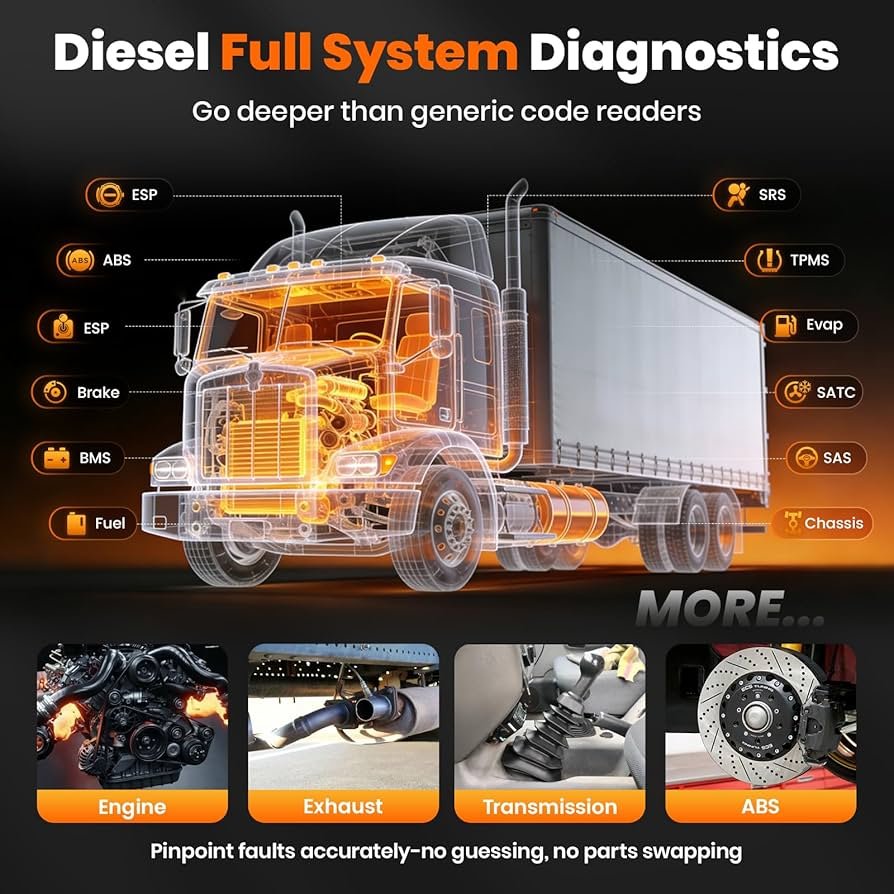
How does that play out? It can command the MCM to run a forced regen while graphing differential pressure in real time. It’s worth noting that you'll pay for that depth: subscriptions for DDDL run between $500 and $1,200 annually, and you'll need the Green 9-pin connector plugged into a laptop that can handle the 500k baud rate data stream. Not exactly what you'd expect.
Older blue 6-pin. Or 9-pin 250k cables simply can't keep up. They'll drop packets and miss intermittent codes entirely.
As one tech lead at Diesel Laptops put it, "The shift, hmm. Let me put it differently, to the 500k baud rate was necessary because modern trucks have. Make of that what you'll. It just works. " That switch happened around the time the CPC4 modules started flooding CAN lines with telemetry, and if you're still using the wrong cable, you're guessing.
The Hidden Costs When You Get It Wrong
From a broader view. Misreading a Freightliner diagnostic code isn't a harmless oops. It triggers a chain of expensive wrong turns.
A driver sees SPN 157 FMI 16 (fuel rail pressure too high), and assumes a bad high-pressure pump, so the shop replaces it for $3,200. Two days later, the code returns.
The real culprit? — a chafed wire in the engine tap into that would've cost $80 to repair.
Nobody checked the freeze frame data that showed the fault occurred only during — okay. More accurately, a specific vibration at 1,400 (which is a critical factor) RPM and 85% load.
This brings us back to what we started with, on the surface, fleet managers I've spoken to around the DTNA setup often describe this as the biggest hidden cost of modern trucks: part-swapping. Because someone didn't understand that a FMI 7 (mechanical system not responding) often leads to throttle valve. Remains an open question. Or EGR valve replacement when the root cause is actually low coolant flow or a dirty DEF injector. Arguably where owners replaced three NOx sensors and a DEF pump before someone finally realized a pinched dosing line was to blame.
There's the ghost code phenomenon. Intermittent faults that come and go without a pattern. Most likely but by the time the truck gets to the shop. The code is inactive.
Techs can't replicate it, so they clear it. The truck breaks down again 300 miles later. Staring at an inactive code with no freeze frame is like trying to address a noise that only happens on Tuesdays. Repeat tow bills stack up rapid.
That's where Detroit Connect Virtual Technician earns its keep: it captures and emails the detailed report within minutes of the fault. Here's the other side of it. Including a snapshot and a probable cause, all the time recommending wiring checks (and rightly so) or specific connector inspections.
Tools That Cut Through the Guesswork
If you only buy one piece of diagnostic hardware. A NEXIQ USB-Link 2 with the Green 9-pin adapter is the most reliable way to read Freightliner data from a laptop. That jumped out at me too. Paired with a basic J1939 scan tool, it'll pull active.
Inactive codes, live data, and some freeze frame snapshots. To clear codes, run calibrations, or pull off forced aftertreatment functions, you'll need the Detroit Diesel Diagnostic Link software. Which, as I mentioned, starts at around $500 per year for a single VIN license.
Here's what I do when I get a new truck in the fleet. This is core. Or help a neighbor with a Cascadia: To start, check the dash for active lights. Which means i plug in, scan, note every code, and immediately reset the check engine light only after I've saved the freeze frame. Actually, let me clarify; I don't clear it yet.
On the surface, i want to see if the same code returns (at least in quite a few practical scenarios) after a key cycle. Then I pull up Virtual Technician from my email. If the truck (and the data generally agrees) has Detroit Connect. That report might already tell me exactly which connector to check.
Many issues with Freightliner codes stem from a loose CPC ground. Or a corroded 31-pin bulkhead connector near the firewall, not a sensor failure. I've seen a breeze wiggle test solve a recurring SPN 520200 FMI 5 (transmission control module communication) that had three previous shops stumped.
Building on that earlier point, when you're staring at a transmission-related derate, understanding how Toyota transmission problems or Chevy transmission problems behave can help you spot similarities in limp mode behavior, but heavy-duty DTs and Allisons have their own logic. That changes the picture quite a bit. Worth pausing on that one. The principle's the same though: if the TCM loses signal from the output shaft speed sensor, so it defaults to a safe mode and throws a FMI 8 (abnormal signal).
Aftertreatment: The $18,000 Mistake Waiting to Happen
Severe aftertreatment codes can trigger Limp Mode, which cuts your truck's speed to as low as 5 mph to protect the engine from emissions violations.
That's not an exaggeration; it's a real, federally mandated consequence. The system doesn't care if you're in the middle of rush hour on I-285. It just shuts you down.
The One Box, the combined DOC, DPF, and SCR assembly. The follow-up question is obvious, so where does that leave us? Is the most likely culprit when you see SPN 3216; SPN 3251 — or SPN 4094.
Replacements run $12,000 to $18,000, and and many dealer technicians will quote that number the same day you roll in. Puts things in perspective. Sometimes the problem is upstream: a failed DEF dosing unit. A cracked mixer tube, or simply a clogged differential pressure sensor line. I've personally seen a truck with 400,000 miles on a Cascadia get a "asks for One Box" diagnosis from two separate shops.
Make of that what you will. Yet the only issue was a collapsed vent line on the DEF tank preventing proper injection. That was a $12 fix. Stick with me here; this pays off.
If you're running newer DD13 or DD15 engines. You've probably noticed how sensitive the aftertreatment monitoring has become. The calibration is tight. Even a slight drift in NOx conversion efficiency throws a code. This sensitivity is intentional, meeting EPA guidelines.
But it frustrates drivers who spend more time at the dealership than on the road., so fleets report up to 15% more shop visits for aftertreatment codes compared to pre-2016 engines. Not exactly what you'd expect.
The Virtual Technician can't fix a plugged DPF. But it can tell you whether a forced regen — correction, is possible or if the DOC face is plugged.
- Save the freeze frame immediately — capture RPM, load, EGR duty cycle, and DEF pressure before clearing anything.
- Check Virtual Technician report — open the DTNA email and read the probable cause section; it often points to a specific wiring harness or sensor.
- Inspect the Green 9-pin connector — wiggle the bulkhead connector on the firewall and look for corroded pins that cause intermittent CAN faults.
- Test for ghost codes — road-test with a data logger that captures all channels at 500k baud; watch for dropouts at specific vibration loads.
- Verify aftertreatment sensors before replacing the One Box — check DEF quality, dosing valve flow, and differential pressure line integrity before authorizing a $15,000 module.
People Also Ask
Why does my Freightliner have so many fault codes at once?
A single loose ground or a failing CPC module can cascade dozens of codes because the controllers talk to each other constantly.
Like, if the CPC loses communication with the instrument cluster, it logs SPN 638 (CAN bus), and then the cluster logs multiple SPNs for missing engine data, transmission status, and ABS info, all from one bad connection.
Can I clear a Freightliner check engine code with a cheap code reader?
Yes, but you'll lose the freeze frame data and the engine might derate again right after.
Most generic J1939 readers can clear active faults, but they can't reset permanent aftertreatment derates or run calibration routines. For the cascading limp mode after repeated aftertreatment faults, you must use DDDL or a factory-level tool.
What's the difference between SPN and FMI?
SPN (Suspect Parameter Number) identifies which component or sensor is flagged, while FMI (Failure Mode Identifier) tells you the type of failure, like voltage too high, short to ground, or performance out of range.
SPN 97, Like, is water in fuel indicator; FMI 0 means the signal voltage is too low, pointing to a sensor circuit issue rather than actual water.
How much does a Freightliner diagnostic code scan cost at a dealer?
An initial diagnostic scan usually runs between $150 and $300, but if the code requires a forced regen or injector cutout test, the bill can climb past $1,000.
Many independent shops charge $80 to $120 for a basic scan, but they may not have DDDL to perform the deeper tests.
Are all Freightliner codes standard across different years?
Most J1939 codes remain the same, but proprietary manufacturer-specific codes (SPNs above 5,000) can vary between engines and module generations, especially between CPC3, CPC4, and CPC5 modules. Always check the engine serial number and software revision when looking up codes.
You'll see how this ties into the previous point, when you look closely. Modern Freightliner diagnostic codes don't have to be a source of panic. Plus, the system is brutally honest once you learn to speak its language.
Pay attention to the freeze frame. Trust the Virtual Technician report when it arrives, and never fire the parts cannon just mostly since a code looks scary.
Every difference between a $12 vent line and an $18,000 One Box is a careful scan. And (which works out well in practice) a little common sense.
🔍 Research Sources
Verified high-authority references used for this article