A full storage quota is the primary reason for SharePoint not syncing, often indicated by a red “X” or “Storage Full” notification on the OneDrive icon. If storage is clear, the issue may stem from invalid file characters or path lengths exceeding limits.
Troubleshooting SharePoint not syncing
| Cause | How common | How to confirm it | Fix it yourself? |
|---|---|---|---|
| Storage quota full | Very common | Check OneDrive tray icon | Yes |
| Invalid file names | Common | Look for red error icon | Yes |
| Path length limit | Common | Check file path length | Yes |
| Sync app outdated | Moderate | Check for app updates | Yes |
| Account credentials | Rare | Sign out and sign in | Yes |
| Network firewall | Rare | Test on different network | No |
Full storage prevents data updates
The most frequent culprit for a stalled sync is a lack of available space either on your local hard drive or within your SharePoint library quota. This happens because the sync engine requires a buffer to process temporary files during the transfer; if the drive is nearly full, the system halts to prevent data corruption. You can test this by right-clicking the OneDrive cloud icon in your taskbar and selecting “Settings” to view your storage usage. If the bar is red or near its maximum limit, you must delete unnecessary files or empty the recycle bin.
If your local drive has sufficient space, the issue might lie with your organization’s SharePoint site quota. This limit is set by your IT administrator and varies by company policy. You can’t override this limit yourself; if the site is full, you must contact your administrator to request more space. A mistake users often make is trying to force a sync by restarting the computer repeatedly. This consumes time and doesn’t solve the underlying space constraint. If you have enough space but the sync still fails, check the “Manage Storage” tab in your browser-based SharePoint portal to see if the library itself has reached its defined capacity. This varies by your organization’s IT policy; check with your administrator for the exact gigabyte limit assigned to your specific user account.
Invalid characters and path limits
Files with special characters or names that are too long will cause a sync error in the SharePoint environment. Windows has a limit for file path lengths, and SharePoint often struggles to sync files that contain symbols like asterisks, pipes, or colons. You can identify these files by clicking the OneDrive icon; it will usually list the specific files that are blocking the process.
To fix this, you must rename the offending files or move them to a folder closer to the root directory to shorten the path. If you have a folder nested ten levels deep, the path length might exceed the two hundred and sixty character limit. This is a common trade-off: you want organized folders, but deep nesting breaks the sync engine. If you’re working with a large number of files, don’t try to rename them one by one. Use the “View online” option in your sync settings to rename them in the web interface, which is often faster. Who this is NOT for: if you’re using a legacy operating system that doesn’t support modern naming conventions, you might encounter these errors more frequently. Always ensure your file names avoid symbols like <, >, :, “, |, ?, *, and / to keep the sync process smooth. If you have a large batch of files to rename, check for bulk renaming tools, but be careful not to break the links if those files are already embedded in other documents.
Outdated sync app and credentials
An outdated version of the OneDrive sync client often creates compatibility gaps between your local machine and the cloud server. The software periodically updates itself, but if your internet connection was unstable during an update, the files might be corrupted. You can confirm if this is the cause by looking for an “Update” button in your sync settings menu. If you don’t see one, your version is likely current.
Another frequent issue is a stale authentication token. If your password recently changed or your session expired, the sync client can’t prove your identity to the server. You can fix this by clicking the OneDrive icon, selecting “Settings,” and then choosing “Account.” From there, click “Unlink this PC” and sign back in. This doesn’t delete your files; it simply forces the app to refresh your credentials. If you have multiple accounts, ensure you’re signed into the correct one. A common mistake is assuming that a sync error means the files are lost. The files are safe on your local drive; they’re simply not uploading to the cloud. If you have a very large library, the initial re-sync after signing back in can take several hours depending on your connection speed. Don’t force a shutdown while the “Processing changes” message is visible, as this can lead to further sync conflicts.
The less likely causes
Office Upload Center conflicts: The Office cache often traps files in a “pending” state. If you see a persistent yellow exclamation mark, open the file in the Office application to resolve the sync conflict directly within the app. This forces a fresh handshake with the server.
Network firewall restrictions: Corporate networks often block non-standard ports used for background synchronization. If your sync status remains “Processing changes” for more than an hour, ask your IT department to whitelist the specific OneDrive URLs. Without this, the traffic is dropped silently at the gateway.
Corrupted local cache: If your sync engine crashes repeatedly, the local database is likely malformed. You can reset it by running
%localappdata%\Microsoft\OneDrive\onedrive.exe /resetin the command prompt. This forces a full re-index, which may take several hours for large accounts.Antivirus interference: Aggressive heuristic scanning can mistake rapid file hashing for ransomware activity. If sync halts immediately after a security update, disable your antivirus for ten minutes. If the queue clears, you must add the OneDrive folder to your security software’s exclusion list to prevent recurring blocks.
What a fix usually involves
Fixing sync issues usually involves a small amount of time and basic software adjustments. Most solutions, such as renaming files, signing out, or clearing storage, require no special tools or extra costs. If you need to upgrade your SharePoint storage, this is usually handled by your organization’s IT department, and the cost is part of your existing service agreement rather than a new out-of-pocket expense.
If the problem requires a deep technical reset, you might need help from a system administrator. The time required for a fix depends on the volume of data; a small folder syncs in seconds, while a large library with thousands of items can take hours to verify. You can check the official Microsoft documentation or your company’s internal wiki to see if there are specific sync policies for your department. Never pay for third-party software that claims to “fix” SharePoint sync issues, as these are often unnecessary and can pose a security risk to your company data. Always rely on the official sync client provided by your organization.
Frequently asked questions
Can I stop SharePoint from syncing certain folders?
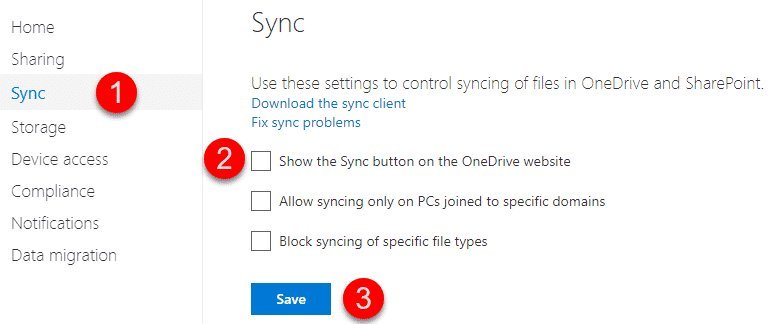
Yes, you can use the “Choose folders” setting in the OneDrive app to select only the folders you want to sync to your local machine. This is helpful if you have a massive library and limited disk space. Simply right-click the cloud icon, go to Settings, and uncheck the folders you don’t need. This removes the local copies while keeping the files safe in the cloud.
Why is my status icon showing a red X?
A red X indicates that a specific file or folder can’t be synced due to an error, such as a naming conflict or a permission issue. Click the OneDrive icon in your taskbar to see the specific error message provided by the app. It will usually tell you exactly which file is causing the problem so you can rename it or move it to a different location.
How long does it take for SharePoint to sync?
The time it takes depends on your internet upload speed and the size of your files. For a few documents, it usually takes only a few seconds. If you’re syncing thousands of files for the first time, it can take several hours. You can monitor the progress by hovering your mouse over the cloud icon in the taskbar to see the remaining file count.
Is it safe to unlink my account and sign back in?
Yes, it’s perfectly safe to unlink and re-link your account. This process doesn’t delete your files; it only removes the link between your local folder and the cloud. Once you sign back in, the app will scan your files to ensure they match what is on the server. This is a standard troubleshooting step recommended for most sync issues.
What happens if I rename a file while it’s syncing?
Renaming a file during a sync can sometimes create a temporary conflict where the system sees two versions of the same file. It’s best to wait until the sync status shows “Up to date” before you rename, move, or delete large numbers of files. If a conflict occurs, the system will usually create a copy of the file with your computer’s name appended to it.
Does it matter if I have multiple versions of the same file?
Yes, having multiple versions can lead to “Sync Conflicts” where the system doesn’t know which file is the correct one. SharePoint usually handles this by saving the newer version and keeping the older one as a separate file. You can resolve this by opening both files, checking the timestamps, and manually deleting the outdated version to keep your library clean.
Final Thoughts
If these quick fixes don’t get your files moving again, don’t worry. Reach out to your company’s IT help desk so they can check for deeper account permissions or network blocks. They’ll be able to see exactly what’s happening behind the scenes, and you’ll be back to your work in no time.
Related guides